What does my pet need as they age?
Dr Grace shares with us some of the issues that can arise as our pets grow in age, and what you can do to provide them the support they need.
Day to day living and base activity, like breathing, eating, drinking, sleep, exercise all require to body to function as a single unit. The body contains organs and systems that work in a very cohesive, highly intertwined manner.
Anything can impact these systems on a day to day basis; be it maintaining basic bodily needs to physical and metabolic trauma and stressors.
Biology has a way to manage and heal these activities to a certain extent.
As a whole when the single bodily unit is fully functional, the organism is capable of resolving and healing any ongoing reversible stressors; Replacing old damaged parts of the body with new building blocks that are programmed to work an expected way.
This systems however, start to falter with age.
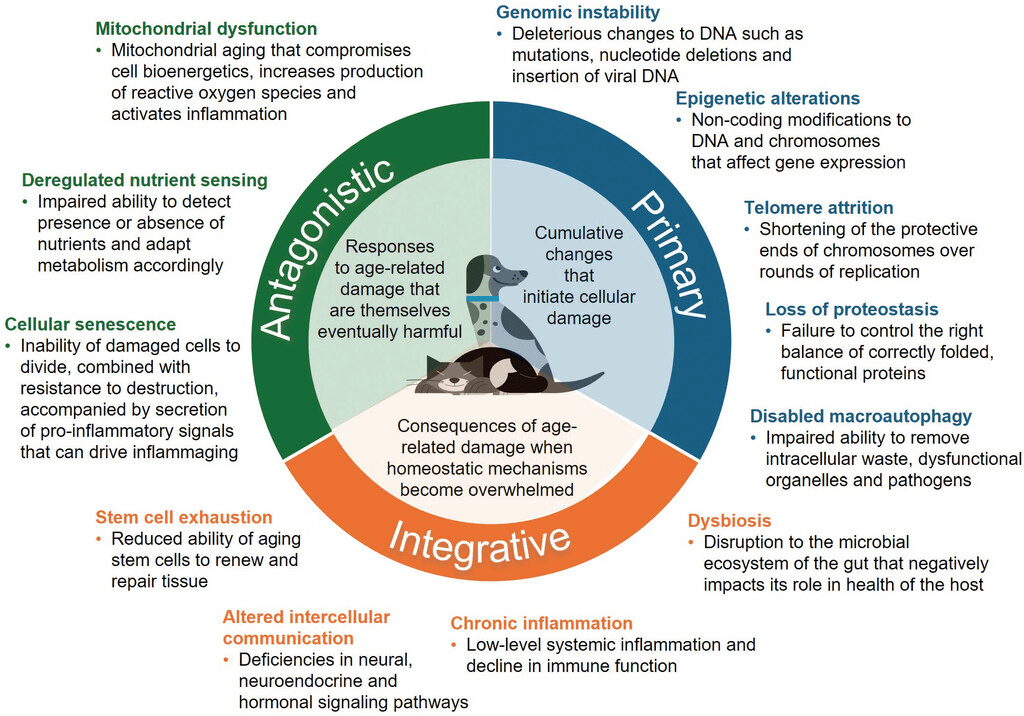
Image 1
Ageing occurs when the replacements body parts do not function correctly. This process mostly happens gradually. However, it is well known that Cats and Dogs age faster than Humans.
A Study published in Cell Systems (A Cell Press Journal)
“Quantitative Translation of Dog-to-Human Aging by Conserved Remodeling of the DNA Methylome” Using Labradors as models showed that the well-known, 1 human years = 7 dog years was found to be more of a non-linear ageing progression.
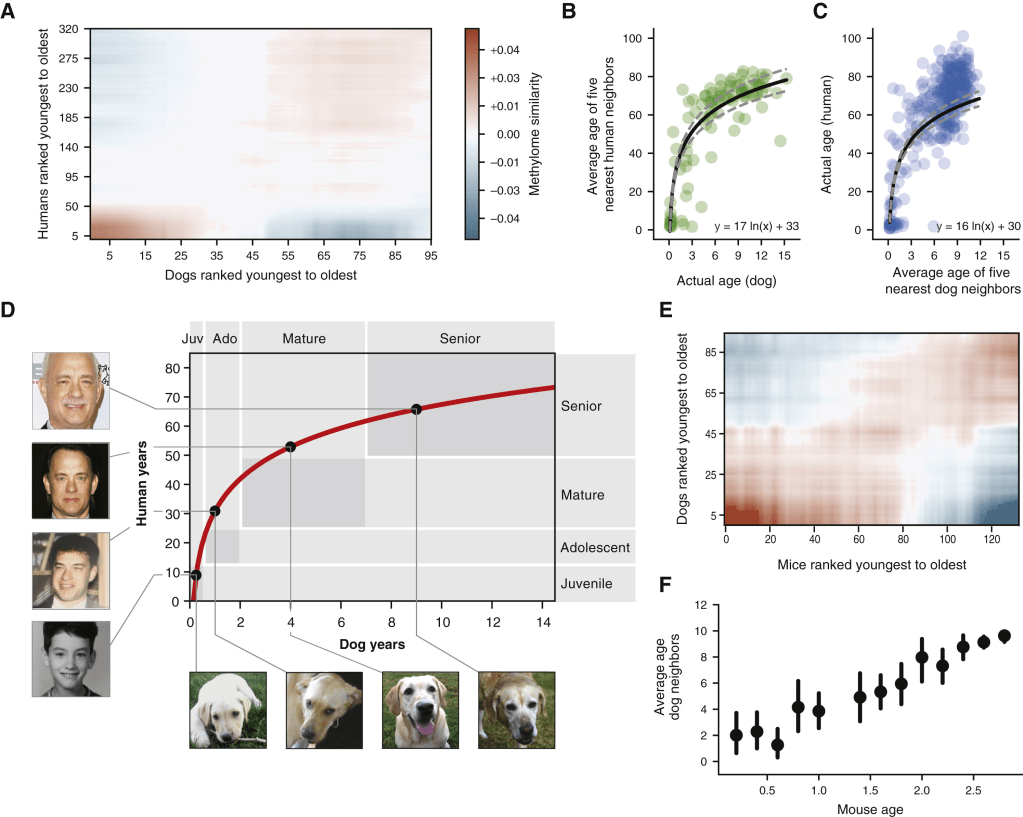
Image 2
Ultimately this doesn’t change the mindset that our pets age faster than us humans. Time passes quickly for these treasured ones. This accelerated ageing can be attributed to their accelerated metabolic growth and development.
Hence their degeneration is expected to be accelerated as well.
You could look at your baby and one day realise they have a lot more white in their fur, their eyes don’t shine as bright. They do not get up as quickly as they did, they don’t run around like they used to. They are sleeping a lot more, they seem to look skinnier and are less bulky than they were, lumps and bumps appear. Sometimes they bark at walls and had forgotten they had eaten a mere 5 minutes prior. These are signs that we can physically observe with ageing.
What is less obvious is organ dysfunction, metabolic and hormonal imbalance.
If one looks closely enough, we may see it; the changes in appetite (increased, decreased), the occasional vomit or diarrhoea, the excessive urination, the occasional bumping into objects, mild to obvious changes in behaviour.
In some symptoms, a basic blood exam to assess the basic metabolic state may be able to pick up the start of what is an ongoing disease. In other symptoms, especially in hormonal based disease, further blood exams will be required to pin down a diagnosis. Some require imaging to find or stage a disease of issue.
Common diseases of mid to older patients:
- Osteoarthritis (Bone and joint disease)
- Kidney disease
- Ocular (eye) disease
- Cancer (Neoplasia) – seen and unseen
- Cognitive decline
- Dental disease
- Heart disease
- Reproductive disease (non-desexed animals)
- Endocrine disease (hormone)
The concept of ‘Healthy Aging’ was a subject touched on in the American veterinary Medical Association (AVMA). They Propose “that healthy aging in dogs and cats should be regarded as aging in which the individual maintains functional capabilities and develops resilience sufficient to meet their own physical, behavioural, social, and emotional needs throughout all adult life stages, while sustaining the human-animal bond.” (Delphine Moniot DVM et al. 2025).
The paper mentions that ‘Healthy Aging’ comes from early detection of dysfunction and continued ongoing support of said systems and organs, with an approach that involves BOTH the patient and their human caregiver/s.
Ultimately, you as owners/caregivers know the fur-kid the best. When something is wrong you are the first line in defence of getting to the root of the issue. This fact is unchanged in aging. Daily at-home mini examination, interactions, monitoring appetite and toilet times is a basic good start on knowing what the next step should be.
You might also like to schedule more frequent health checks, for seniors we recommend every six months for a physical examination and chat about how things are travelling along. These more regular checks can help us to find new health concerns early, something that could save your pet’s life.
Always feel free to reach out to us at the Pet Care Hub if you have any concerns about your pet. We want to be there when you need us to facilitate healthy aging.
Let’s tackle Healthy Aging together!!!
Dr Grace
1. Tina Wang et al. Quantitative Translation of Dog-to-Human Aging by Conserved Remodeling of the DNA Methylome. Cell Systems, A Cell Press journal. 2020. Volume 11 Issue 2.
2. Delphine Moniot DVM et al. Aging is modifiable: current perspectives on healthy aging in companion dogs and cats. Journal of the American Veterinary Association. 2025

 Pet Care Hub