
How DO I know what’s right to feed my pet?
Vet Nurse Tabatha Gives Her Nutritional Tips & Tricks To Help You Understand & Make The Right Choices For You & Your Pet, In This Information Overloaded Subject.
Navigating the world of pet nutrition can be daunting. There are so many approaches, each stating their way is the right way.
But let’s clear up a few things to help you choose what is right for you and your pet.
Pet nutrition is a space that has rapidly grown over the years. Today, you can walk into any pet store and find at least 20% of the store is comprised of pet diets, each proclaiming to be the best. You’ll also discover lots of groups, organisations and small businesses claiming raw feeding, home cooked meals or their boutique home delivered meal plans are perfect for you. But which is the right one for you and your pet?
Well, here at the Pet Care Hub you won’t find us stocking any foods outside of the basic veterinary diets needed for those unexpected tummy upsets. Why is that? Well, there are a LOT of foods on the market that are amazing, and we want to empower pet owners to gain knowledge from us to choose the right product. We simply cannot stock them all and we won’t pressure you to choose only that which we stock.
Here is Nurse Tabatha’s top 5 tips and tricks in choosing the right food for your pet.

Tip 1 Understand the packaging information.
All products come with packaging information. You’ll find details such as the manufacturer, description of the diet including information about the species, life stage, breed size or even the breed the product is suited for. Along the beliefs of the manufacturer as to why their product is amazing.
Learning to separate the marketing on the package to the useful information will help you make better informed choices.
Things to look for which is not marketing and can tell us if a food is more likely to be a quality diet:
- Clear daily feeding guide and nutritional value table: does the food display clearly show how much to feed in cups or grams? Does it show the caloric value of the food ie. kcal/kg?
- Guaranteed analysis: this is a breakdown of the essential macronutrients (ie. protein, fat, fibre, moisture, carbohydrates etc)
- A full list of ingredients. Remember that ingredients are listed in order of the highest quantity to the lowest in the formulation (ie if chicken is listed first, chicken makes up the largest portion of the formula)
- Industry standard logos from organisations such as AAFCO, this demonstrates the food has been tested to meet the minimum standards and nutritional standards for the species and life stage claimed

Tip 2 Lifestages, Lifestyles & Diseases
Puppies and kitten have very different nutritional needs to adult dogs and cats. Growth and development is very much impacted by diet, so ensuring you choose a diet suitable to the age of your pet is extremely important!
Nutritional deficiencies and even over supplementation can cause some horrible growth deformities that will affect your best friend for life. Just as young pets and adult have their own needs, so do seniors, working dogs and those with specific diseases.
Always ensure you choose the right lifestage or lifestyle for your pet. The general rule of thumb is pets under 1yr old should always be on a puppy or kitten formula. Over 1yr of age (or 1.5yrs for those slower growing giant breeds!), choose the lifestyle that suits best, i.e. working dog through to couch potato. Lastly, if your pet has a specific disease such as dental problems, bladder or kidney disease or have skin or allergy issues; a special diet would be required instead of regular adult food.

Tip 3 How Much To Feed?
To answer this loosely, the amount that enables your pet to stay a stable health weight. This differs for all, just like with people. By healthy weight, for all breed dogs and cats over the age of 1yr, we want to see a hourglass figure from above. Ribs should be easily felt but not seen and when looking from the side, the tummy should tuck up forming a night waist line.
Of course, there are out-layers to this; greyhounds whippets and other hound breeds are very lean dogs, seeing their ribs and muscles is normal. Conversely, dogs like Bulldogs might be a little more straight waisted, but we should always be able to feel their ribs easily.
If you’d like to be more precise about your calculations for exactly how many calories your pet needs, the formula to work out the RER, or resting energy requirement is 70 × (BW kg)0.75.
Please note that the RER is the minimum caloric requirements for survival, it does not take into account activity or other nutritional demands of your pet. To work this out, you will need to multiply the above value by a specific factor to work out their DER or daily energy rate. Most adults are the RER x 1.5-2. A working dog or whelping bitch is far higher (and can be as much as the RER x ~6).
For pets needing to lose weight, my meal plans will often involve starting the pet on the RER only and assessing needs from there. For weight loss and gain plans, we strongly recommend chatting to us for guidance to ensure underlaying issues are not the cause and then we can create safe weight gain or loss plan for your pet taking into account your unique needs and preferences.
Remember, that if you are calculating your pet’s caloric requirements, include all meals, treats and snacks! What looks like a little treat, might in fact be quite high calorie or a large portion of the daily energy needs

Tip 4 Quality Control
Probably the scariest thing about the pet food industry, is that it is unregulated. There is no authoritative body that oversees companies manufacturing foods and this leaves pet owners in a tricky situation at times.
When I am looking at pet foods, I like to look for green flags and red flags to tell me if a food is safe to try for my pets.
Green flags are foods that clearly tell me everything I want to know on the label as outlined in tip 1. If basic information like the caloric content is missing, this is a red flag. Foods that carry the AFFCO branding and state they are ‘complete and balanced’ is a green flag, this is a manufacturer who has reviewed the Association of American Feed Control Officials guidelines and invested the time and finance in ensuring their food meets the minimum requirements for nutritional adequacy and the meets the standards expected. These standards are used world wide and the result of years of studies into the nutritional requirements of companion animals.
Conversely red flags might be foods that the manufacturer is labelled the same as the name of the storefront (these may be made by someone else and labelled under the stores brand which is misleading). Another big red flag is foods not adhering to the AS 5812 ‘labelling guidance’ in providing the directions for use, ingredient list, nutritional information and AFFCO statement. These may not be complete and balanced and can be hard to feed as we have no basic details that a quality manufacturer should be able to tell you about their food.
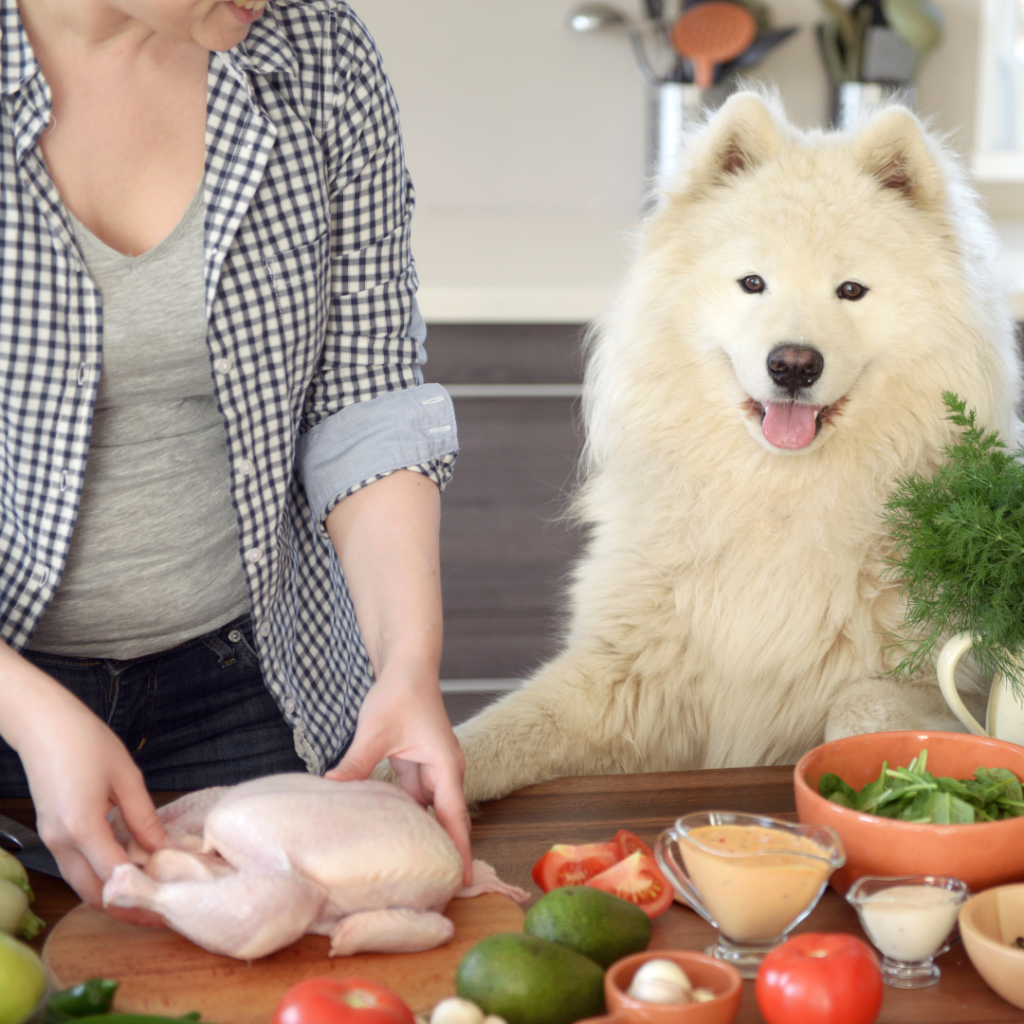
Tip 5 Commercial VS Home Cooked VS Raw feeding
A rather contentious topic, that we find incites some pretty firm beliefs. Our role is to not tell you what is right for you, but to give you the tools to decide yourself. So here are the pro’s and con’s
Commercial food: when a quality diet is purchased, adhering to the lifestage, lifestyle and disease considerations, you can be sure that you are meeting the nutritional requirements of your pet using the data we have available. Commercial diets are freely available, have good shelf life if kept as directed, are low food safety risk, is an economical way to feed your pet and is wonderful for those of us who are time poor (long day with drive through dinner for yourself anyone?!).
Raw feeding and or home cooked diets can be wonderful, but the things to take into consideration is the need for vast variety including grains, vegetables, protein from a variety of sources plus much more. You need to ensure the balance of protein, fat, fibre and carbohydrates is correct (high fat diets are often the result of taking this avenue). You also need to consider vitamins and minerals are provided in the right quantities, and be aware that under or over supplementation can cause harm. Lastly, food hygiene is imperative. Raw feeding is often the source of tummy upsets due to food contamination, raw poultry for example is renowned for ease of salmonella contamination.
If you believe that raw or home cooked meals are for your pet. Please discuss this with your vet and consider a consultation with a specialist Animal Nutritionist (be mindful of choosing someone with the correct qualifications for this, we can help with a referral if you’d like to explore this avenue)
We sincerely hope that this information helps to bring to light the considerations that should be made when selecting the right diet plan for your beloved furry family member. We are here to guide you and if you have questions, we welcome them. If we cannot answer a questions, due to the complexity of the nutritional space, we will either find you the correct answer and advice, or refer you to someone who can.
Nurse Tabatha

 Pet Care Hub